Wednesday, February 9, 2011

An Ideal Offering

I was recently going through a series of articles being put on the website of Sringeri Mutt (www.sringeri.net) under a section called Upadesha Lahari. It contains translations, audio, video of lectures of current and former Jagadgurus of Sringeri Mutt. The articles published there are really good and meant for common men who are interested in spiritual elevation.

Here I summarize one of those articles which is a translation of Anuraga Bhashanam (lecture on devotion) delivered by Jagadguru Shankaracharya Sri Bharati Tirtha Mahaswamiji at Kapaleeshwara Temple in Chennai during his Vijaya Yatra in 1986

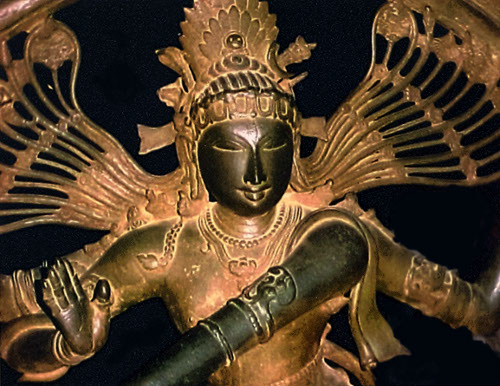
To worship God (Bhagavan) and thereby become the recipient of His Grace is what has been traditionally regarded for thousands of years as an ideal to aspired for. It is our responsibility to keep up that tradition.

यस्याहुरागमविद: परिपूर्णशक्ते-
रंशे कियत्यपि निविष्टममुं प्रपञ्चम् ।
तस्मै तमालरुचिभासुरकन्धराय
नारायणीसहचराय नम: शिवाय ॥

Sri Shankara has conveyed much about how Iswara should be worshiped. Normally, when we visit a temple, we do not go empty-handed; we take some offerings with us for Ishwara. What is the most fitting offering to Bhagavan? The reply given by Sri Sankara in the form of a prayer to Ishwara is quite interesting.

“O, Lord, what shall I offer You? What competence do I possess for offering anything to You? What is the object not possessed by You which I can give You?”

Offering gold, gift of money, modern articles, cool sandal wood paste etc to God is not appropriate. Bhagavatpada analyzed all these options and came to a conclusion.

“O, Lord, I am not competent to offer anything to You. However, there is an object, which I am going to dedicate to You. It is my mind.”

Many raise the objection, “It is not possible to offer the mind to Ishwara. If the mind were to be an external object, we could take it and place it at His feet. But it is not so. We cannot physically handle the mind. How then can we dedicate our minds to Ishwara?” The answer is, “By keeping Ishwara in our minds at all times”. The import is that a person must ever engage himself in thinking of Ishwara. He should not entertain any other thought in his mind.

Is it possible to achieve such a mental state?
In Lord Krishna’s time, the Gopis were ever contemplating on Him. We read in the Bhagavata that the minds of the Gopis did not think of anything or anyone, but the Lord. A devotee has composed a beautiful verse about the condition of the Gopis.

विक्रेतुकामा किल गोपबाला मुरारिपादार्पितचित्तवृत्ति: ।
दध्यादिकं मोहवशादवोचद्गोविन्द दामोदरमाधवेति ॥

The Gopis earned their living by selling milk and curds. In order to attract the attention of people to the items the Gopis had to loudly utter, “Milk! Curds!”. Instead, the Gopis shouted, “O, Govinda! O, Damodara! O, Madhava!” and so on. They set out to sell milk and curds but as their minds were ever engaged in the thought of the Lord, the words “milk” and “curds” did not come out of their mouth. They were uttering the names of the Lord.

God will accept whatever one offers to Him if one’s mind is ever engaged in thinking of Him.
Bhagavan has declared in the Gita:

पत्रं पुष्पं फलं तोयं यो मे भक्त्या प्रयच्छति ।
तदहं भक्त्युपहृतमश्रामि प्रयतात्मन: ॥

“I will accept whatever one offers Me with true devotion.”

Though it is only the knowledge of the Self which leads to liberation, a person who is not competent to tread the path of knowledge should worship Ishwara with devotion. What, indeed, will be the fate of a person who lacks the competence and the opportunity to directly get the knowledge of the Self and yet does not tread the path of devotion?

सा त्वस्मिन्परमप्रेमरूपा ॥

So say the Sastras. One must direct one’s attention exclusively to the Lord; such a state of mind is termed as devotion.

Devotion is not a path meant only for common folk. It is not as if the wealthy ones need not be devoted. All are equal from the standpoint of Ishwara. It will be a grave sin if one were to think that one need not bow down to Ishwara just because one is affluent.

Please read the complete translation of the Bhashanam at the following link

Wednesday, January 5, 2011

Twenty Five days and Three celestial puzzles

December 22nd 2010, I was at my home wearing a sweater, covering myself with a blanket standing on the terrace of my house gazing at zillions of stars over my head trying to solve three celestial puzzles that looked to be posed by GOD over the next 25 days.

DECEMBER 22nd 2010

December 22nd, a special day of astronomical significance generally not known to many except if you have some interest in astronomy or sky gazing. It is the day when the people in the higher latitudes (Europe, Russia, North China, North America, Canada etc. ) experience the shortest day and the longest night. This day is referred to as the winter solstice. If you are thinking why will there be a shortest day, then you have landed on the right page to understand that.

Earth has an axial tilt of 23.45 degrees. The winter solstice occurs when the earth's axial tilt is farthest away from the sun. It is because of this axial tilt, the northern hemisphere will have winter and the southern hemisphere has summer and vice versa. The same axial tilt will cause the shortest day and longest night in northern hemisphere AND longest day and shortest night in southern hemisphere on this day. 


One interesting question that might arise in your mind is why is it called Winter solstice even though southern hemisphere is enjoying its summer! Astronomical events are recorded w.r.t Coordinated Universal Time(UTC) which in essence is Greenwich Mean Time(GMT). Since Greenwich is in northern hemisphere, winter/summer solstice is named after the season that occurs in northern hemisphere.


JANUARY 4th 2011

Ten days after the solstice, into the new decade on January 4th 2011, partial solar eclipse was observed in Middle East countries like Dubai, Abu Dhabi, Muscat, UAE (United Arab Emirates), Qatar, Bahrain, Riyadh, etc. We have studied since school days that a solar eclipse occurs, when moon comes in between the sun and the earth i.e. All the three heavenly bodies stand in a single line. I want to share couple of interesting facts about eclipses which most people might not know. The orbit of the moon around the earth is tilted at an angle of 5.14 degrees from the plane of earth's rotation around the sun. The orbit of the moon intersects the earth's orbital plane at two points called the ascending node and descending node. When the moon is at either of these two points, the eclipse(solar/lunar) will occur. In Indian astronomy the ascending node is the all famous RAHU and the descending node is the all famous KETU.


Another interesting fact is that these nodes(rahu/ketu) are not static. They are regressing in the clockwise direction. This is because the oribit of the moon around the Earth is wobbling. It is because of the regressing, the eclipses do not occur periodically at a particular date every year.

JANUARY 15th 2011

Mostly known in India as Makara Sankranthi, Pongal, Bhogi etc, this day has been celebrated from the past 6000 years. It marks the beginning of the Uttarayana(travel to north).

Throughout the year if you keep recording the position of the sun w.r.t distant constellations which generally is the zodiac constellations, we can observe that the sun keeps moving from one zodiacal constellation to another which is seen as sun's background. The day when sun enters a new constellation, it is called a sankramana. Similarly on January 15th the sun enters the constellation of capricorn(makara), hence it is called the makara sankramana or sankranthi.


In this screen captured from stellarium, we can see the sun entering the Capricornus(makara) constellation

The zodiac belt which consists of 12 constellations circling the earth, through which the sun takes its yearly path appears to be tilted at an angle of 23.45 degrees because of the earths axial tilt as said in the beginning of the article. 


 (left)The zodiac symbols, (right)the zodiac belt tilted at an angle of 23.45 degrees from the orbital plane of the earth

The sun as it moves across the zodiac will have to take an ascending path and then the descending path. It is on January 15th the Sun starts its ascending path with respect to the zodiac i.e. its travel towards north and hence called the beginning of Uttarayana.

Next time when you look up at the sky, hope you will not miss anymore puzzles...

Thursday, December 23, 2010

EI with a refreshing look for the year 2011

2010 was a very good year for Education Informal (EI). Through our school visit program we reached around 500+ students conducting around 10 sessions across various schools in Bangalore. In this year, the special focus was on conducting more Vedic Mathematics sessions and training young students with the fundamentals of Vedic Mathematics. We got positive feedback about our sessions from students, teachers and parents. We also collaborated with Vision Bangalore to conduct free healthcare camps at schools. 

Education Informal is one of the 12 NGOs to be featured in 2011 calendar based on community service theme [The calendar is brought out by Vakil builders]. IBM also recognized Education Informal for its initiative to introduce Vedic Mathematics to young students across various schools in Bangalore. Soon an article about EI will be published in the IBM website. 

New EI website was launched to project EI activities in a better way on the WWW. The new website is intended to reach volunteers, students, and other members who intend to contribute under the EI platform. EI will be focusing on introducing new sessions/programs and broadening its school visit program to higher grades. We thank all the people who have helped us to conduct our programs/sessions through out the year. We look forward to work with you all in the coming year 2011. 

WISH YOU A VERY HAPPY AND PROSPEROUS NEW YEAR 2011

Saturday, November 6, 2010

An Insight into Health care in today's India

Since the beginning of Ayurveda till today medicine in India has gone through numerous changes. The term Ayurveda was given to the ancient Indian system of medical education literally meaning the knowledge of life. Although origin of Ayurveda is uncertain, it is considered to be a branch of vedas. 
 
The evolution of medical sciences in ancient India has been difficult to follow accurately. The two monumental treatises Charaka samhita and Sushruta samhitaa written by Charaka (Physician) and Shushruta (Surgeon) respectively are  considered to be the two basic treatises considered to this date for practitioners of Ayurvedic medicine in India. In ancient India medical education was institutionalized. The two well known centers for medical education in ancient India were the residential universities of Takshashila and Nalanda. Both these universities offered a well organized institutional type of training to its students  intermingled with Gurukula system with a Guru taking under him a fixed number of students. 
 
In medieval times, it is difficult to understand how a system of medicine which had reached great heights in the surgical as well as medical side, in the course of centuries faded away. Not to despair we still have doctor s  studying and practicing Ayurveda in India and abroad. The British rule in India marked the advent of Western medicine into India. During their rule, the British passed various acts for the improvement of public health in the country. Even after India got its Independence, the western system of medicine which had gained world wide acceptance by then got more support from the Governments that got formed.

Today Bachelor of Medicine, Bachelor of Surgery or in Latin Medicinae Baccalaureus, Baccalaureus Chirurgiae (MBBS) is awarded as a first professional degree upon graduation from medical school in medicine and surgery by universities across the world that follow the tradition of United Kingdom(UK). 

Recently getting into medical schools has been a challenge to most of the aspirants in India. The tough competition in the entrance tests, huge amount of fees, arduous and long course, low initial salaries have resulted in a drastic reduction of aspirants who are willing to choose a course in medicine. The lucrative salaries offered to Engineers in India and abroad which have got the benefits of less fees, comparatively shorter duration of the course, high initial salaries, job offers before graduation make students mesmerized to opt for Engineering courses unless for a some really interested aspirants. 

It is no doubt that with so much of trouble that the doctors would have taken for their current position they charge for services according to their whims and fancies. I heard from a friend of mine who has done his MBBS, that in US and UK doctors spend a fixed amount of time for treating patients and plan the remaining amount of time for research and evolving themselves for new approaches in medicine[strict formal process es are laid by the authorities]. In contrast, in India most of the doctors spend their time treating patients without properly engaging themselves in research. I also heard from my friend that, a doctor who does not participate in research and seminar for certain duration will be derecognized. As to this, we should now understand how many of the doctors around us are recognized!  We also lack a proper central system to manage health records of patients which might save precious time of doctors by avoiding unnecessary dialogues with patients about the history of the disease and related details.

I always wonder, in spite of having the second largest population in the world, sanity conditions being below par causing illness to most of the population, India has not been a favorite in medicine learning. There is a lot of disparity among the disciplines of Engineering, Medicine and Basic sciences. I always compare them to Cricket and other forms of sports played today in India.

As we are beginning to step into the 21st  century, we should tactically solve this problem of disparity and provide a more reasonable and justified solution which offers equal opportunities to all sections of society to pursue education based on healthy competition  rather than on mundane things like end result(payment), course fees, status etc. Although i may sound superficial without any such thought, our contribution to the field of medicine may fade away and our medical processes might become more diluted.

Wednesday, November 3, 2010

The unconquerable land


Ayodhya a land which has grown to international importance, has its name come from the sanskrit root word yudh, meaning "fight" or "wage war" and it translates to either "not to be fought" or, less literally, "unconquerable." It may seem to anyone that it has grown to importance for its root origin (fight, wage war) rather than for its complete meaning (not to be fought). 

Most of us are aware of the history of events that took place at Ayodhya way back since 1992 when Babri masjid was demolished till the recent Allahabad HC verdict in 2010. Without touching any of the above known events there is a recent development reported in a news paper which i thought of sharing with my view point. 

There has always been a campaign to build a Rama's temple in Ayodhya by VHP, RSS and BJP. Chandrakant Sompura, Architect was entrusted with the designing and construction of the Rama's temple by VHP chief Ashok Singhal. The architecture of the temple designed by him has been well known to most of us. 


Parallel to the above campaign there has been an attempt to start a new campaign to build Rama's temple in Ayodhya which has been slow but surely taking shape. But this campaign is not started by RSS, VHP or BJP.    It is Swami Swaroopananda Saraswati, Shankaracharya of the Jyotipeeta (Badrikashram) and Dwarakapeeta (Gujarat) [two of the four centers of Advaita learning established by Sri Sankaracharya] who has taken this initiative.


He has been linked to politics and is perceived to have been a close ally of former Prime Minister Rajiv Gandhi and had close relations with all the three generations of Gandhi family. Sources said Swaroopanand's new plan has the unspoken support of the Congress leadership. The idea is to wrest the temple initiative from the saffron brigade and isolate BJP, VHP and the Sangh on this issue in the aftermath of the September 30 Allahabad high court order. 

Swami Swaroopanand has unveiled a new plan to build a temple dedicated to “Brahma Ram (Ram as God) as opposed to the adarsh (ideal) or purushottam Ram as advocated by VHP. The design for the new temple was unveiled at the conclave of shankaracharyas held at Sringeri earlier this year.

The latter essentially recognises a mortal or human form of Ram which the shankaracharya finds unacceptable.
“A temple in the name of adarsh Ram can be a tourist spot but not a place for worship. Only a temple consecrated to Ram in divine form as Brahma Ram will be acceptable to Hindus,” Swaroopanand told a group of mediapersons at his Kalindi Colony residence in Delhi.

The shankaracharya also pointed out that VHP's temple plan would never be realised due to the vaastu dosh (architectural fault) in its Ram temple design.He said the shilanyas held by VHP in November 1989 also suffered from vaastu dosh as it had been done for a Sinha dwar (main entrance to the shrine), far from the Ram Janmasthan (birthplace) and in the south direction, which was “inauspicious”.

Swaroopanand’s campaign is aimed at getting the temple built by the Akhil Bharatiya Ramalay Nirman Samiti. This would effectively nix the saffron brigade’s plans to get the temple constructed by the VHP-controlled Ram Janmabhoomi Nyas.

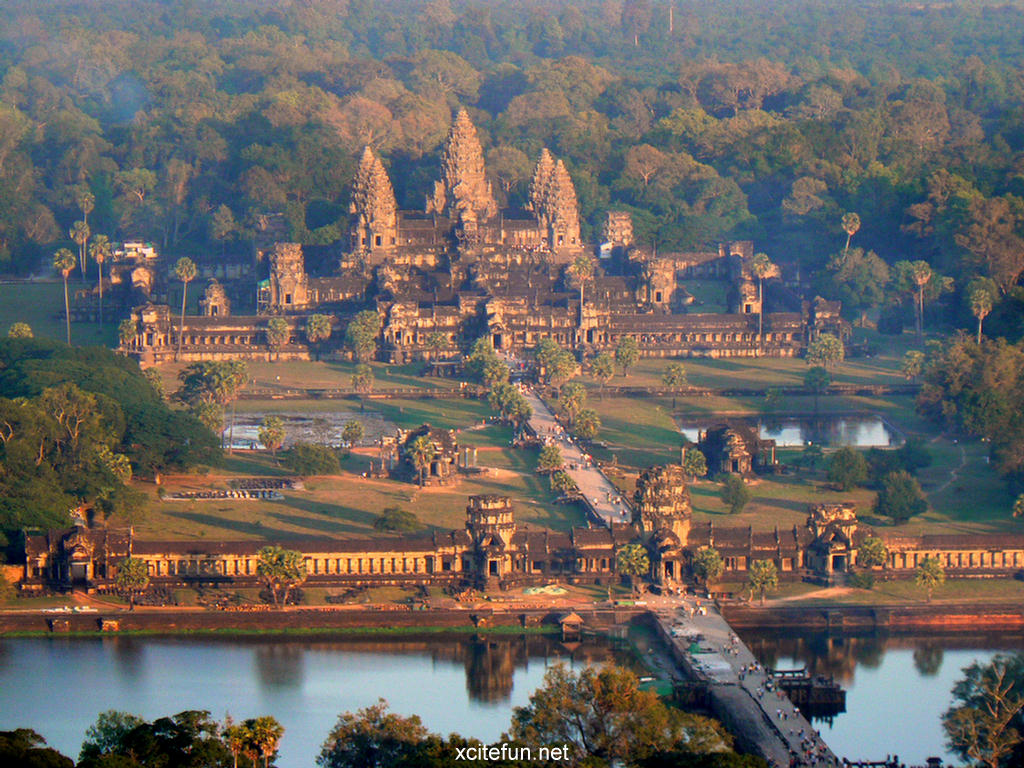
The new temple's design, proposed by Akhil Bharatiya Ramalay Nirman Samiti, is based on Cambodia's Angkor Vat Temple. The temple will be 350 ft high and have five gold plated spires built on top at a cost of Rs 100 crore. It will have a hall to accommodate 10,000 devotees at a time. There would be an extensive CCTV network that would help nine lakh devotees in the premises watch the prayers. There would be broadcast facilities for live telecast.


Photos of Cambodia's Angkor Vat Temple

Now the fight for Ayodhya has taken a new turn and it looks like the Congress is tacitly backing the new gambit. We will have to wait and watch if AYODHYA [not to be fought] will ever free itself from the fights which are happening at different planes.

Link to the actual news article published in DNA on Nov 2nd 2010 can be read here 

Friday, October 29, 2010

Launch of BHAASHYA

You might be aware of my recent posts on hindu scriptures, especially my attempt to analyze Brahma sutras. After serious thought I have decided to keep this blog for sharing my general views (as i have done so far) and create a new platform for discussing and analyzing the former topic. In this direction i have created a new blog and have moved all my articles related to the said topic to the new blog. Have a look at it and give your suggestions/comments there

The new blog is named BHAASHYA [http://bhaashya.blogspot.com/] which means commentary, which closely relates to my idea of analyzing the scriptures.

Thursday, August 12, 2010

Independence Day - A Day to Act

15th of August 2010 we celebrate the 63rd Independence day. The generation who saw this country get the independence on 15th August 1947 are leaving behind memories of the day. With days passing by we may end up with no one from the generation physically there to explain it. But before that why should there be someone to explain it, After all a country is not about just one generation.

The independence day is a special day for us. It is the day when India emerged as a Geo-political entity. A country had to be built from its roots [I write this with the information I have read/heard from books/people which/who have recorded/witnessed the day]. If a country had to be built, then it must not have existed before. If that is the case then what was India before? What were its roots?

In today's world, by birth we belong to one country or the other. This is one decision which we have to accept whether we like it or not. Each individual (human being) on this earth has an objective (right/wrong) for his life with exceptions where people spend their entire life searching for the objective. Considering the population our country has, and the amount of objectives the confused minds in it create, it is really a hard mathematical problem to get a set of common objectives (although not impossible). In this case is there any chance to think about a common objective for the country? If “YES” Who should fix such an objective for the country? If “NO”, then as responsible citizens where are we expecting the country to move forward?

A precursor for any individual who is fixing an objective for his life, is to get inspired about it. For e.g. if the objective of my life is to become a very good engineer then such a thought should have come to my mind only because something that inspired me to become an engineer. That something can be anything like “I read an inspirational story about an engineer”, “Some one from the family is an engineer who has got fame/name/money”, “Watched a movie about an engineer who changed the world” etc. Inspiration comes as we acquire experience and information from numerous sources (parents, teachers, books, friends etc) through out our life.

Now, how does a country get inspiration to decide its objective. When I say the country gets inspiration, it means how do people in the country get inspired for the country and decide a road map for its progress. Such an inspiration for the country can be got only by speaking of its rich history and culture which has been the foundation of what we are enjoying now. A land with such a background has produced men and women the world would never forget. We being the modern citizens of the country should always remember that and feel blessed to have taken birth in this land. An environment that nurtures dynamic heroes of the future should be cultivated by us. We should teach everyone about the rich history of the country and how each individual has a crucial role in determining the road map for the country. Together we should all work together to fight the diseases plaguing the country like corruption, population, civic sense, illiteracy, poverty etc. and for the betterment of education system, civic sense, governance, disaster management etc.

It is a memorable day (15th August) as some of us think, but should we celebrate it like yet another weekend or should we brainstorm and discuss ideas which we can implement to lay a road for the colorful future of the country again to remembered for its rich past and culture some 500 years from now.

Many eminent people have started contributing in this direction significantly. I have started my very minute and negligible contribution through Education Informal with the support of my parents, family and friends. My life is complete if I can work with many such people to create a bright and colorful future for the country.